Showing posts with label Research. Show all posts

Thursday, 20 February 2020

Tutankhamun's chariot armour

Tutankhamun's chariot armour, mentioned in my last post, formed part of a scale armour tradition that dates back as far as the third millennium BCE.  Remains of scale armour have been found at a number of sites, it's discussed in the Nuzi texts, and it's often depicted in Bronze Age art, but the depictions tend to be small and not very detailed.  Tutankhamun's armour provides a fascinating opportunity to study what Bronze Age scale armour was like in real life.

The battle-jacket was damaged when first discovered but the remnants remain in good condition to allow researchers to use a cutting-edge form of photography to find new details about the hard leather tunic
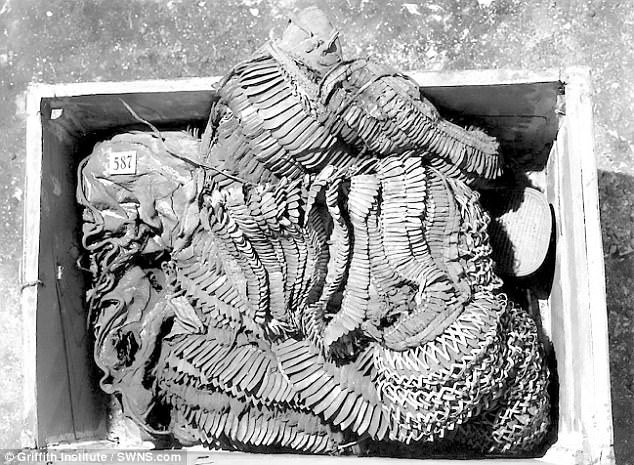
Tutankhamun's chariot armour, made sometime around 1325 BCE.  Image from the Griffith Institute.


This photograph shows the armour as it was found, folded and placed in a box in Tutankhamun's tomb.  It is the only complete, intact set of Bronze Age chariot armour that has ever been found, and this is the only photograph of it in existence - at least in its intact state.  The armour appears to have disintegrated when Carter and his team tried to remove it from its box.   They tried to conserve it, but were not very successful.  Today, all that remains are a few fragments and some loose scales in a box in the Egyptian Museum in Cairo.

Unfortunately, this means we don't know exactly what the armour looked like.  Carter's description was brief and not very detailed.  In his three volume publication on Tutankhamun's tomb and artifacts, he wrote only one short paragraph on the chariot armour.

"Another form of defensive armour was a crumpled-up leather cuirass that had been thrown into a box. This was made up of scales of thick tinted leather worked onto a linen basis, or lining, in the form of a close-fitting bodice without sleeves. It was unfortunately too far decayed for preservation." Howard Carter, 1933: The Tomb of Tut Ankh Amon Volume III p.143.

The last sentence suggests part of the reason Carter didn't offer a more detailed description of the armour may have been because there wasn't much left to examine.  As far as I'm aware the first and only really comprehensive analysis was completed in 2002.  This is a doctoral dissertation written by Thomas Hulit, entitled Late Bronze Age Scale Armour in the Near East: An Experimental Investigation of Materials, Construction, and Effectiveness, with a Consideration of Socio-economic Implications.  It is available from the British Library's e-theses online service, and you do not have to be a UK resident to use this service.

Tutankhamun's armour would have looked much like these examples from the tomb of Rameses III, which shows cuirasses stacked ready for allocation to chariot warriors.

Image from Late Bronze Age Scale Armour in the Near East, by Thomas Hulit.


The drawing is more of a schematic representation than a detailed illustration, but it does show the overall shape of Egyptian chariot armour and suggests how colourful this armour could be.  All the scales of Tutankhamun's cuirass appear to have been painted red, but these ones have alternating stripes of different colours.  The cross lacing that helps support the skirt section of Tutankhamun's armour, and is visible at the lower right corner of the photo, is missing from the Rameses III drawing, either because that detail was omitted or because not all chariot armour included this feature.  In his dissertation, Hulit describes other fragments of cross laced scales which would have been located on the shoulders of the cuirass - you can tell from the size of the scales.  This makes me question what exactly Carter meant when he described the cuirass as sleeveless.  Personally, I suspect the small scales around the shoulder area extended down over the shoulders somewhat, forming what we might call cap sleeves.  I'm not aware of any Bronze Age depictions of scale armour that are actually sleeveless, and I think it may have looked something like this:

Possible reconstruction of scale armour found at Kamid el-Loz.  This image also comes from Late Bronze Age Scale Armour in the Near East, by Thomas Hulit.


This picture also illustrates the different sizes of scales used to make Bronze Age armour, which is not evident in the drawings from Rameses III's tomb.  It's not evident in Bronze Age art in general, but we know this was a characteristic feature of scale armour at the time.  Tutankhamun's scales range from around 25mm to 60mm in length, and around 17mm to 35mm in width.  The scales' thickness varies too, from 1.8mm to 2.5mm.  As you might expect, the smaller scales are thinner than the large wide ones.  Assyrian records described armour scales as being either "large" or "small", but this doesn't entirely reflect the variety in size and shape found in Bronze Age armour scales.  It's more a reflection of the fact that you need larger scales for the body of the cuirass, and smaller ones for the neck and shoulder area where there is a greater degree of curvature.

The scales were linked together in rows and sewn onto a linen backing, apparently with a leather lining.  Where the linen backing survives it consists of six layers of fabric, which would have provided additional protection and some degree of padding.  Arrows which failed to penetrate the armour could still have caused bruising or even broken bones, but a survivable injury is better than a fatal one.

As part of his thesis Hulit constructed and tested armour samples made from rawhide, bronze, rawhide and bronze in combination, and alum tawed leather.  Early examination of the scales had suggested they were made from alum tawed leather, but this was subsequently found to be incorrect, and while Hulit was not able to conclusively determine what type of hide product the scales were made of, rawhide seems to be the most likely candidate.  He tested them using a reproduction of the bows and arrows used at the time.  These experiments showed that rawhide scales would have provided a good level of protection against arrows, and of course weighed a lot less than bronze.  Leather was cheaper than bronze too, but leather armour still requires a lot of time and material to produce, and it was still an expensive, prestigious item.  Most Egyptian soldiers at the time did not wear armour at all.
Tuesday, 18 February 2020

Scale Armour Appreciation Day

Subeixi or Scythian scale armour, 800 - 200 BCE, photograph from the Met.  It's made of tough leather scales sewn to a leather backing.

Everyone loves scale armour.  It looks so cool, and you can make it yourself at home.  What's not to love?  Scale armour and its close relative lamellar armour* have become a bit of a cliche in historical re-enactment circles, and armour made with leather scales get an especially bad rap because people wear it in contexts where it really doesn’t belong, but in fact there is plenty of evidence to show that it’s period accurate.  It just depends what period you’re talking about.  Leather armour is not historically accurate for Vikings or other medieval Europeans because it doesn’t provide enough protection against medieval weapons and battle tactics, but it is a documented option for some Asian cultures, ancient Egypt and the Bronze Age Near East in general, and of course also Scythia.  Seriously, how cool is that Scythian armour?

The first known evidence for scale armour comes from the Bronze Age Near East.  There's very little evidence for it in Europe or the Aegean at this time, possibly because it did not fit with the military tactics used in those regions, but it was big in Egypt and Mesopotamia, where it was primarily associated with chariot warfare.  Chariot drivers and archers couldn't effectively use shields to protect themselves, and the solution they came up with was scale armour.  Bronze Age scale armour was complex – more so than most of the other examples discussed in this post.  It was often long enough to cover the upper legs and required several different sizes of scale held together with a variety of construction methods.


The battle-jacket was damaged when first discovered but the remnants remain in good condition to allow researchers to use a cutting-edge form of photography to find new details about the hard leather tunic
Scale armour belonging to Tutankhamun.  Image from the Griffith Institute.


This is a suit of chariot armour made from leather scales sewn onto a linen backing, found in the tomb of Tutankhamun.  Tutankhamun may or may not have worn it himself, but someone did, because it shows signs of having been used in battle.  It wasn’t a cheaper option for people who couldn’t afford bronze, either.  Although the majority of armour scales recovered from Bronze Age sites are metal, this is the case because leather doesn’t survive well in the archaeological record.  In fact it appears that most Bronze Age scale armour was made from leather, or a combination of leather and bronze.  Thutmose III's inscription celebrating his victory at the Battle of Megiddo suggests leather scale armour was 100 times more common than metal scale armour, likely because it’s significantly lighter than metal and therefore more suitable for chariot warfare, which relied on speed and manoeuvrability.

Scale armour changed significantly over the centuries, but it remained in use for a very long time.  The Romans frequently used iron or bronze scale armour, which they called lorica squamata and which appears to be a direct descendant of the scaled cuirasses sometimes shown in Classical Greek art.  There's even evidence that leather scale armour was still in use in Egypt in Roman times.  This really surprises me; I’d have thought it would be obsolete by then, but apparently not.


File:Linz Schlossmuseum - Römischer Schuppenpanzer.jpg
Fragment of Roman scale armour from the Linz Schlossmuseum.  Image from Wikipedia.  Notice how the scales were attached to each other, as well as to a backing which has not been preserved.


A red figure painting of Achilles, wearing a linothorax which incorporates scales for added protection.  Image posted to the Total War Centre forum, and unfortunately not attributed.


It appears that Greek linothorakes weren't always made exclusively from linen and sometimes had scales.  These could cover the entire the entire linothorax, or could be positioned around the torso only as shown above.  I'm not aware of any surviving examples, but scaled linothorakes are well attested in red figure depictions and presumably used scales made from iron or bronze similar to the ones used in lorica squamata.  As you can see Greek scaled cuirasses were fairly similar to the Scythian example above, and since these two cultures interacted with each other ideas about how to construct armour may have been transferred between them.

Here we can see a style of scale armour unique to China, known as mountain armour.


Song dynasty relief, image from Wikipedia.

Unfortunately there are no surviving examples of mountain armour, but there are some hypotheses about how it may have been constructed.  It would have required incredible skill and precision to create the scales needed for mountain armour, and most Chinese scale armour seems to have involved simpler oblong scales instead.  The materials used to make these scales could be surprising.  In some cases they were made from layers of laminated paper, while the suit of armour shown below uses scales made from stone.  I question how practical stone armour would have been, but it undoubtedly looks impressive.  As far as I can tell stone was a very unusual material for Chinese scale armour and is really only associated with the mausoleum of Emperor Qin Shi Huang, so perhaps it was not used in battle.


Warring States period cuirass and helmet made from stone scales.  Image from Wikipedia.

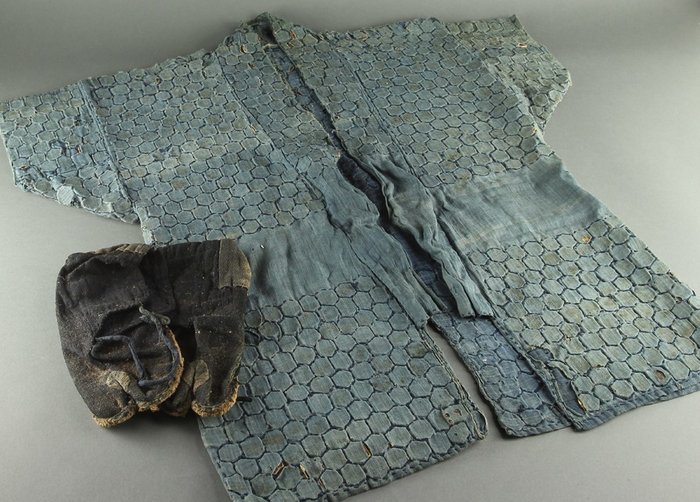
Japan developed its own style of scale armour, which is very different from the other examples pictured in this post and represents a completely different approach to the concept of scale armour.  A lot of Japanese armour technology was influenced by the Chinese and tended to resemble Chinese armour styles, but the Japanese also developed innovative, and distinctly Japanese, forms of armour.  One of these was based around hexagonal tiles of metal or rawhide, called kikko.  The kikko were placed side by side and linked together with metal rings, or sewn between layers of cloth.  The ability to conceal kikko scales inside the lining of clothing made it popular during the Edo period, when many warriors required armour that could be concealed under their normal clothes.


kikko katabira (1) - Cotton - Samurai armor jacket (katabira) and pair of shoes - Japan - Edo Period (1600-1868)
Edo period scale armour jacket, or kikko katabira, featuring kikko sandwiched between layers of cotton.  Image from Catawiki.  It's just as well this piece is sold already, or I would have been tempted to bid on it.


I hope you've enjoyed this brief survey of scale armour as much as I have.  It's not remotely comprehensive of course, but it's nice to take a look at the many interesting forms scale armour has taken across a number of civilizations and a time span of almost 3000 years.


*  Technically, the difference between scale and lamellar armour is whether or not it has a backing material.  With scale armour, the scales are attached to a backing material made from leather or textile, whereas lamellar armour involves small plates attached to each other in such a way that they don't need a backing material to keep them in place. 

Monday, 12 February 2018

The added value textile hypothesis

Otherwise known as the "weaving a large polychrome textile is not feasible for me, so let's think outside that box" hypothesis.

Most studies of patterned Minoan and Mycenaean textiles tend to focus on textiles with patterns woven into them, because weaving does seem to have been an important method of producing patterned textiles.  The weaving techniques used involved brocades made with supplementary threads, and probably also tapestry.  But weaving is only one of several ways to create patterned cloth, and in fact we know from the Linear B evidence that textiles frequently had decorative elements applied after they were woven.

The reason for this is that not all textiles were woven on-site at the palace administrative centers, and the weavers had a range of different skill levels.  Woven fabric came from a variety of sources, because in the Bronze Age taxes were paid in labour or in commodities like cloth.  Polychrome weaving demands a very high level of technical ability, especially for the kind of designs attested on Aegean frescoes, and quality could not be guaranteed when the weaving process happened outside the palace.  The solution was to get weavers to produce plain cloth and then decorate it using a separate finishing process at the palace, where quality could be assured.

Presumably cloth woven at Knossos and other palace sites was made by specialists and involved advanced techniques, such as brocaded patterns.

The process of adding value to plain cloth was carried out by specialised workers listed in the Linear B tablets. Men were employed as fullers, while a-ka-te-ri-ja and o-nu-ke-ja were women whose job was to decorate finished cloth.  o-nu-ke (onukhes probably) literally means fingernails or claws, but in a textile context it means wool-based decorative elements applied to cloth.  It may therefore be the Mycenaean term for embroidery, or perhaps fringed trim applied to garments.

Embroidery was used across Europe and the Near East in the Bronze Age.  Considering Greece's extensive trade links with the Near East, and the influence of Near Eastern traditions on Greek textile production known from the first millennium, I don't think it's unreasonable to expect Near Eastern-type embroidery in Greece.

Interestingly, one of the Akrotiri frescoes shows a piece of cloth decorated with dashed lines that may indicate running stitch.  However, these dashed lines may also represent carnelian beads.

Image result for akrotiri frescoes
Image from the Ancient History Encyclopedia

Textiles decorated with beads and other sewn-on ornaments appear to have been popular.  Large numbers of small gold foil shapes, like these ones from Mycenae, have been found in Mycenaean tombs.  They appear to have been sewn on to textiles, and would be a very effective way to add value to plain fabric.

Image from the National Archaeological Museum in Athens.

Another method of adding value to plain textiles, which is clearly shown in Minoan and Mycenaean art, is the use of decorative bands and fringes.  The women on the Aghia Triada sarcophagus (pictured below) wear dresses made of plain cloth, ornamented with with coloured bands which appear to have been sewn onto the finished garment.  These bands could be fairly ornate, like the one from Tyrins I copied a couple of years ago.  Making and applying such bands may have been the job of the workers known as o-nu-ke-ja (onukheiai).

File:Sarcophagus from Aghia Triada.jpg
Image of the Aghia Triada sarcophagus from Wikimedia.

Evans also suggested the possibility that Minoan and Mycenaean textiles may have been painted or block printed.  There are, in fact, examples of painted textiles from ancient Egypt, but these appear to have been associated with funerary contexts rather than clothing for living people.

It's not entirely clear whether this sort of added value process also characterised the Minoan textile production model.  Minoan textile production didn't operate in exactly the same way as the Mycenaean system reflected in the Linear B archives, but the scholarly consensus is that the Mycenaean system developed from the earlier Minoan model.  When the Mycenaeans took over Crete, they simply used and adapted the infrastructure that was already in place.  Therefore, the two systems had a number of similarities, particularly in the sense that cloth was delivered to the administrative centers but not necessarily made there.

The Minoan system appears to have been a little less centralised, meaning cloth was even less likely to have been made in a palace workshop staffed by experts.  However, the Minoans had extensive international trade networks, beginning around 2700 BCE.  It's reasonable to expect this trade included textiles which would have needed to meet a consistent quality standard, so the assumption that Minoan cloth sometimes started life plain and was finished at Knossos is consistent with our understanding of Minoan textile production.

I don’t wish to downplay the importance of patterned weaving in the Minoan and Mycenaean textile industries.  There’s plenty of evidence to show it was important.  What I’m saying is that when we consider the Linear B texts it becomes clear weaving was not the only method used to create patterned textiles, and therefore it is not the only method we should consider when trying to reconstruct Bronze Age textiles.


References

Abdel-Kareem, O. et al.  2008.  "Conservation of a Rare Painted Ancient Egyptian Textile Object from the Egyptian Museum in Cairo".  e-PreservationScience 5, 9-16.

Alberti, M. E.  2007.  "The Minoan Textile Industry and the Territory from Neopalatial to Mycenaean Times: Some First Thoughts".  Creta Antica 8.  243.

Barber, E.  1991.  Prehistoric Textiles: The Development of Cloth in the Neolithic and Bronze Ages with Special Reference to the Aegean.  Princeton (NJ): Princeton University Press.

Casson, L.  1991.  The Ancient Mariners: Seafarers and Sea Fighters of the Mediterranean in Ancient Times (2nd edition).  Princeton (NJ): Princeton University Press.

Evans, A.  1921.  The Palace of Minos.  London: MacMillan & co.  You can download it here.

Gleba, M.  2017.  "Tracing textile cultures of Italy and Greece in the early first millennium BC".  Antiquity, Volume 91, Issue 359, pp. 1205-1222  Available here.

Immerwahr, S. A. 1990. Aegean Painting in the Bronze Age. University Park (PA): The Pennsylvania State University Press.

Laffineur, R. & Betancourt, P. P. (eds) 1997.  TEXNH: Craftsmen, Craftswomen, and Craftsmanship in the Aegean Bronze Age.  Philadelphia: Temple University.

Nosch, M. L. 2014 "The Aegean Wool Economies of the Bronze Age". Textile Society of America Symposium Proceedings. 900.  http://digitalcommons.unl.edu/tsaconf/900

Nosch, M. L. (ed)  2014.  Prehistoric,  Ancient Near Eastern, and Aegean Textiles and Dress.  Oxford: Oxbow Books Limited.

 Nosch, M.L. & Laffineur, R. (eds)  2012.  KOSMOS: Jewellery, Adornment, and Textiles in the Aegean Bronze Age.  Leuven: Peeters Publishers.

Nosch, M. L. & Gillis, C. (eds)  2007.  Ancient Textiles: Production, Crafts and Society.  Oxford: Oxbow Books Limited.

Ortiz-Garcia, J.  2017.  "Painting on Linen Cloth in Antiquity: Shrouds from Roman Egypt as a Source for Research".  Textile: Cloth and Cultutre, Volume 15, Issue 1, pp. 34-47.

Ventriss, M. & Chadwick, J.  1959.  Documents in Mycenaean Greek.  Cambridge: Cambridge University Press.  Or download it here.

Wednesday, 31 January 2018

No thank you, Mr Volstead

Human beings are problem solvers.  Other animals may be faster, stronger, or reproduce more quickly than us, but we think our way around problems.  So in 1920, when the Volstead Act outlawed the sale of intoxicating beverages, vast numbers of Americans discovered how easy it is to make alcohol.

Beer was easier to make than spirits, and didn't require any equipment that couldn't be found in a normal '20s kitchen.  This naturally made home brewing an attractive choice.  Making beer* at home was illegal under the Volstead Act, but in practice this part of the Act was too difficult to enforce and everybody knew it.  The Prohibition Commissioner himself admitted that "the government is not in a position to prosecute the non-commercial home brewer."

Prohibition-era beer recipes

The following is a fairly typical prohibition-era home brew recipe, kindly contributed by Stephen Hansen of Stanford University and published online by Realbeer.com:

  Ingredients: 
  • 1 can Blue Ribbon malt
  • 1 pack Fleishmann's yeast
  • 1 cup rice
  • 1 tablespoon salt
  • 5 pounds powdered cane sugar
Procedure: In a large (3 gallon) porcelain pan, add 3 quarts water and bring to boil. Add sugar, stirring. Bring back up to boil and add 1 can of malt. Return to boil again and let simmer for 15 minutes. Fill large glass 1/2 full of luke warm water (not over 130 degrees) and add rice, yeast, and salt. Clean crock and fill 1/3 full of warm water. Pour in wort. Add cold water to within 3 inches of top. Add yeast solution and cover. After 6- 10 hours remove foam with wire strainer. Let sit until hydrometer says "bottle." Fill bottles, adding 1/2 teaspoon sugar to each. Cap and let stand 21 days. Comments: Back when I first started making beer (about 20 years ago now) I actually made several batches using this recipe. The results varied from barely drinkable to snail bait. I especially like his comparison in the last line of the original---"This should make 5 cases of pint bottles of beer equal to or superior to Millers High Life."


The crock used in this recipe would have held around five gallons of liquid** and was intended for making pickles or sauerkraut.  Pickling crocks were a common piece of kitchen equipment during the early 20th century.  They were made of thick stoneware which helped to keep the beer at a nice even temperature for optimal fermentation.

Notice the recipe does not call for hops, which were already incorporated into the malt syrup.  Using a single can of hop flavoured malt extract supplemented with corn sugar or regular white cane sugar seems to have been the norm.  Supplementing (or even completely replacing) malt with other types of sugar had been relatively common in the United States during the colonial period because barley was not always available, and during prohibition home brewers revived this traditional practice.

Like their colonial ancestors, Americans of the '20s and '30s couldn't necessarily obtain malted barley.  But they could enjoy the latest modern convenience: concentrated malt extract packaged in convenient tins.

The malt to sugar ratio varied, but all the prohibition-era malt extract recipes I've seen use one can of malt and derive at least half the fermentable sugar from some type of baking sugar rather than malt.  Sugar was cheap, and readily available in large quantities without attracting suspicion from the authorities, but it does not make great beer.  This, in fact, is the main reason why recipes like the above example did not result in a very drinkable product: beer made with so much sugar would have been thin and unpalatable.

I suspect the reason so many prohibition home brew recipes were so similar is that they were all variations on the same original recipe.  If you had bought a can of Blue Ribbon*** malt and weren't quite sure how to turn it into beer, you could write to the address on the tin for a free recipe booklet.  It was a nice printed book containing a wide variety of recipes made with malt extract, and not a word about beer.  A couple of weeks later, you would get a plain brown envelope with no return address in the mail, which contained a mimeographed sheet of instructions for making beer.  This arrangement was in operation right up until the '70s, because home brewing was illegal in the United States until 1978.


Beer for everyone

Regardless of what the beer tasted like, these prohibition-era malt extract recipes were revolutionary.  They were very simple recipes made with inexpensive ingredients which were legal and available at the local grocery store.  Even if you had never made beer before and knew nothing about brewing, you could easily follow one of these recipes.

Using malt extract meant home brewers didn't need to mash their own grains to make wort, and this was important.  Mashing is time consuming, and requires the brewer to have some idea of what they're doing.  It also requires the brewer to obtain malted barley, and creates large quantities of spent grains which then have to be disposed of somehow.  Malt extract makes the brewing process less complicated, and more discrete.

Thanks to malt extracts and recipes that used them, home brewing became quick, easy, and inexpensive.  This allowed home brew to be made on a scale that has not been seen before or since.  It's impossible to know exactly how much home brew Americans made during the prohibition years, but the numbers we do have are staggering.

In Cleveland alone it was estimated that by 1923, 100,000 residents were making beer or spirits.  To put this into perspective, the 1920 census recorded a total of 116,545 dwellings in Cleveland.

In Detroit, the state Bureau of Taxation reported that 14 million gallons of home brew were produced between January and July 1932.  That was just the home brew they knew about.

These isolated data don't give us a comprehensive picture of home brewing during prohibition, but they do illustrate the popularity of home brewing, and the fact that it had become both accessible and convenient.


*  Making wine at home for personal consumption remained legal.  There were exemptions in place for wine due to its use in Holy Communion.

**  Prohibition home brew recipes typically yielded about five gallons, because that was the typical size of a pickling crock.  Even today most home brew recipes will yield about 5 gallons, and I have to wonder whether this is a remnant of the prohibition tradition that has somehow been retained.

***  Yes, that's Blue Ribbon as in Pabst Blue Ribbon.

Tuesday, 16 January 2018

A brief history of malt extracts


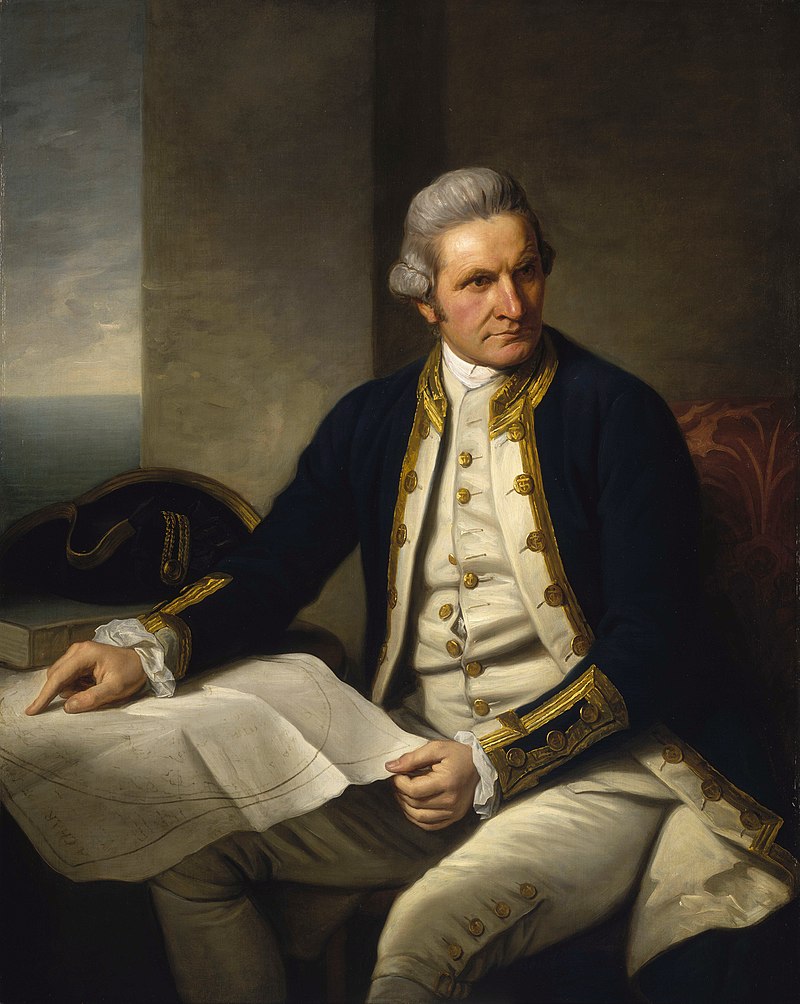
Captainjamescookportrait.jpg
Captain James Cook.
We learned in school that he was the first European to circumnavigate New Zealand, but what we didn't learn is that he was also one of the first people in the world to brew beer from malt extract.

Many brewers are suspicious of malt extracts, either because they think it's cheating (which it kind of is), or because they think it will make inferior beer.  Once upon a time that was true, too, but malt extract has come a long way over the years and the extracts available today will make excellent beers if used correctly.  This post is about the history of malt extracts.

Malt extract is made by taking the sugar extracted from malt during the mashing process and drying it, until it becomes either a syrup or a powder.  Some brands also contain hop extracts, so that the brewer doesn't need to purchase hops separately.  It is of course primarily used to make beer, but it is also used in cooking, and when I was a kid malt extract (without hops) was sold as a health food.  It was the '80s, when people were obsessed with health but somehow you could still get away with marketing concentrated sugar syrup as a health product.

In fact, malt extract does contain vitamins and minerals.  The British Navy was experimenting with malt extracts as early as 1772, trying to create an easily transportable concentrated malt to supplement sailors' diets and help prevent scurvy.  These first malt extracts were not a great success.  When Captain Cook took some on his second voyage to the Far East (1772 - 1775), his crew found that the beer they made with it had an unpleasant burnt taste.  However, it apparently improved when they added spruce leaves and molasses.  Eventually, the British Navy discovered that lemon juice was a more effective and less expensive way of preventing scurvy.

The trouble with early malt extracts was it took so long to boil away the excess water that by the time manufacturers produced a concentrated extract, the malt was burnt and unpalatable.  Technological advances in the late 19th century made it possible to boil the malt in a vacuum, which reduced the boiling time and created a better-tasting product.  At this stage malt extract was primarily a dietary supplement, but from the 1880s onwards British breweries began using it as a cheaper alternative to all-grain brewing.

The birth of modern extract brewing

Ironically, the glorious golden age of home brewing products we now enjoy began as a direct result of prohibition.  The kind of malt extract we're familiar with today, designed for the home brew market and often containing hops, was developed in the 1920s.  When the Volstead Act came into force American breweries could no longer legally produce beer, so they had to adapt, and one of the ways they did this was to produce malt extract instead.  Of course the extract could not be marketed as a home brewing product, so it was promoted as a baking ingredient.  This 1928 advertisement insists that Zobelein's Bohemian hop flavoured malt extract is a food product for use in cooking and baking.  Not for brewing at all.  Honestly.


Courtesy the Homestead Museum
Image from KCET.org

Customers knew perfectly well what the extract was really intended for.  Once you have malt syrup with hop flavouring conveniently added, you can make beer by simply adding water and yeast, and this clever innovation ensured that absolutely anybody could make their own beer.

Prohibition homebrew recipes tended to be a simple mixture of malt syrup, water, yeast, and sometimes corn sugar.  I'm hesitant to try one of these recipes because the results were often pretty horrible.    1920s malt extract was not as good as the extracts available today, and many Prohibition-era recipes didn't use it very well.

Malt extracts for craft brewing

The United States beer industry took a long time to recover from Prohibition.  Beer was produced commercially as soon as it became legal again, but the range of beers on offer was sharply reduced.  Beer enthusiasts who wanted styles that were no longer available were forced to make their own.

In New Zealand and Australia the primary reason for making home brew has historically been to save money, but like their American counterparts Antipodean brewers were also interested in making styles of beer that weren't available commercially.  Until recently the New Zealand and Australian commercial beer industries were decidedly basic, and anything more exotic than a lager or IPA could be difficult to get hold of.

Malt extract manufacturers responded to the increasingly sophisticated home brew market by developing more sophisticated products.  There is now a vast range of malt extract types available, and to some extent this has been enabled by the internet.  Thanks to Google it is easy to find recipes for any style of beer you like, as well as plenty of tips to help home brewers achieve good results whether they're using grain, malt extract, or a combination of both.

To paraphrase Leibniz, everything that is marketable demands to exist.

Monday, 6 March 2017

It's helmet time again!

Thanks to the magical carnival of capitalism that is Ebay, I've managed to acquire some horsehair.  And that means it's time for another beehive helmet, with a plume on top.

This time I'm reconstructing a helmet shown on a ring from Shaft Grave IV at Mycenae.  It's a very similar style to the Phaistos helmet, but with extra padding around the lower edge.

Notice how these helmets have what look like horizontal ridges around the bottom.  This is not unusual with the earlier beehive helmets and likely represents strips of leather that have been padded with either linen or wool, to provide extra protection.  The padded leather has been further reinforced with circular metal attachments.  Because of the way beehive helmets are constructed they're naturally thinner at the bottom, so it makes sense to put a bit of extra protection in this area.

Image from Bensozia


The following doodle illustrates what I think we're looking at here:


Blue lines represent the inner core of the helmet, and black lines represent the outer shell.  You can see where there's space for extra padding between the core and the shell.

The archaeological record tells us a lot about what a Mycenaean's helmet had to protect him from, and why a good thick helmet was desirable.

Head injuries, particularly blunt force ones, seem to have been common on Mycenaean battlefields.  We don't have a lot of skulls from Bronze Age Greece, but a number of the ones we do have show evidence of combat injuries and some had undergone trepanation surgery.  This would have been done to treat intracranial pressure caused by a blow to the skull, or to remove splinters of bone from a head injury.

The reason these people sustained blunt force head injuries is that they were, quite literally, hitting each other over the head with hammers.  This is a stone hammer from 1525-1450 BCE.  It is about 10cm long and would have been fixed to a wooden handle.


Hammer-head from Zakros.


Other weapons likely to cause head injuries were maces, axes, and slingshots.  Early Mycenaean swords were designed for thrusting or stabbing and would not usually have been a source of head injuries, but as we've seen there were many ways to sustain head injuries on a Mycenaean battlefield.

My friend informs me that the ancient Hungarians also practiced trepanation.  They covered the hole in the skull with a metal plate to protect the brain, and had a surprisingly low incidence of infections.  And did you know that the Hungarian word for a smart person literally means "brain drilled"?


Sources discussing skulls and skull injuries

Alusik, T.  2015.  Skull Trepanations in Bronze Age Greece: An Archaeologist’s View.  World Neurosurgery, 84, 2:214-217.

Arnott, 1997.  Surgical Practice in the prehistoric Aegean, Medizinhistorisches Journal.  Band 32, Heft 3-4.

Castleden, R.  2005.  Mycenaeans.  Routledge: Oxon.

Papagrigorakis, M. J. et al, 2014.  Neurosurgery During the Bronze Age: A Skull Trepanation in 1900 BC Greece. World Neurosurgery, 81, 2:431-435.

Monday, 14 March 2016

Let's take a look at the Hymn to Ninkasi


The Hymn to Ninkasi, picture from Tulane University.  It was written around 1800 BCE by an unknown scribe.


Ninkasi was the Sumerian goddess of beer.  The Hymn to Ninkasi is not exactly a beer recipe in the modern sense, but in lines 13 to 48 it contains a fairly detailed description of the process by which Sumerians made beer four thousand years ago:
It is you who handle the ...... and dough with a big shovel, mixing, in a pit, the beerbread with sweet aromatics. Ninkasi, it is you who handle the ...... and dough with a big shovel, mixing, in a pit, the beerbread with sweet aromatics.
It is you who bake the beerbread in the big oven, and put in order the piles of hulled grain. Ninkasi, it is you who bake the beerbread in the big oven, and put in order the piles of hulled grain.
It is you who water the earth-covered malt; the noble dogs guard it even from the potentates (?). Ninkasi, it is you who water the earth-covered malt; the noble dogs guard it even from the potentates (?).
It is you who soak the malt in a jar; the waves rise, the waves fall. Ninkasi, it is you who soak the malt in a jar; the waves rise, the waves fall.
It is you who spread the cooked mash on large reed mats; coolness overcomes ....... Ninkasi, it is you who spread the cooked mash on large reed mats; coolness overcomes .......
It is you who hold with both hands the great sweetwort, brewing it with honey and wine. Ninkasi, it is you who hold with both hands the great sweetwort, brewing it with honey and wine.
1 line damaged
You ...... the sweetwort to the vessel. Ninkasi, ....... You ...... the sweetwort to the vessel.
You place the fermenting vat, which makes a pleasant sound, appropriately on top of a large collector vat. Ninkasi, you place the fermenting vat, which makes a pleasant sound, appropriately on top of a large collector vat.
It is you who pour out the filtered beer of the collector vat; it is like the onrush of the Tigris and the Euphrates. Ninkasi, it is you who pour out the filtered beer of the collector vat; it is like the onrush of the Tigris and the Euphrates.

- Translation by Miguel Civil available at the Electronic Text Corpus of Sumerian Literature, Oxford University.

Let's recap this process:

  1. Ninkasi bakes beer bread flavoured with aromatic herbs and/or spices.  This is a special type of bread called bappir which was used to make beer.  In 1800 BCE cuneiform it is denoted by a combination of the sign for beer and the sign for bread. 
  2. Ninkasi malts grain, and prepares an infusion mash.  
  3. She mixes wort with honey and wine, then ferments the resulting mixture.
  4. Finally, Ninkasi filters the fermented beer and then it's ready to drink.  This beer does not get a secondary fermentation like the beers we're familiar with today, and it doesn't get carbonated.

Unfortunately, the poem doesn't give any guidance as to how much of each ingredient should be used, so I will just have to guess the ingredient quantities.

Dates were probably one of the flavouring agents used to make bappir, and I would expect that some herbs and spices were included as well.  Ancient Mesopotamian people liked spiced food and the Sumerian recipes that survive tend to use multiple flavouring agents*.

I'm a little confused as to whether the grain used to make the bappir is supposed to be malted.  It's possible to make bread from malted grains and the malting process is necessary in order to release fermentable sugars from the grain.  The Hymn seems to imply the bappir has already been made by the time Ninkasi gets started on the malt, but there are scholars who think bappir was made from malted grains.  Perhaps it was made with an earlier batch of malt?  This is possible.  Bappir could be stored for relatively long periods and seems to have been a way of preserving grain for future use.

Another question is why the stuff Miguel Civil translates as "sweetwort" appears to be something Ninkasi can hold in her hands, when wort is a liquid.  Is this just a poetic metaphor?  Is she squeezing the grain/bappir residue to extract as much wort as possible?  It's hard to tell exactly what's going on here.

According to Miguel Civil, the honey mentioned in the hymn is likely to be date honey, while the wine could be either wine, grapes, or raisins.  If it is meant to be grapes or raisins, this may be how the Sumerians introduced yeast to their wort; yeast grows naturally on the skin of grapes.

Exactly how long should the beer be allowed to ferment?  Well, I think the hymn gives us an answer when it says the fermenting vat makes a pleasant sound.  Beers and wines make an audible bubbling noise during primary fermentation.  When you can no longer hear bubbling, the primary fermentation is complete.  I suggest the hymn is telling us, in its poetic way, that the beer was ready to drink after primary fermentation had finished.

The key problem with interpreting the Hymn to Ninkasi is that in order to understand it we have to filter it through modern knowledge about how the brewing process works.  The Sumerians did not have a modern understanding of the science behind brewing so there's no guarantee that what makes sense to a modern researcher bears any resemblance to what the Sumerians actually did.  In some ways the Hymn to Ninkasi raises more questions than it answers, but there's enough there to have a crack at brewing some Sumerian beer and a number of researchers have done so.  There are modernized recipes based on the Hymn available here courtesy of Brew Your Own, and here courtesy of the Maltose Falcons.

Note that these modern recipes include rice hulls.  Brewers add rice hulls to their mash to prevent it getting sticky and clumpy, but rice did not grow in ancient Sumeria.  We don't know what, if anything, the Sumerians used instead.  A potential answer lies in the fact that bappir was not eaten on its own, except during famines.  This possibly (though not necessarily) indicates the bappir was unpalatable.  If that's the case, I suspect bappir contained barley husks as well as the grain itself.

Some researchers question whether Sumerian beer contained alcohol.  Personally I'm inclined to think the question is more how much alcohol it contained; remember the hymn specifically says the fermenting vat makes a pleasant sound.  In other words, something is definitely fermenting in there.  But exactly how much alcohol the beer contained is open to question and different types of beer may have differed in strength.  I have a hydrometer now, so I can put this to the test when I make my Sumerian beer.  At a guess I'd say it will be comparable to modern commercial beers - about 5% alcohol by volume, however the inclusion of date honey means it would theoretically be possible to make a brew with a higher alcohol percentage.

In the next post I'll share the practical results of all this theory!


* D.T. Potts. 1997.  Mesopotamian Civilisation: The Material Foundations.  London: The Athlone Press.

Wednesday, 24 February 2016

Inside the Phaistos helmet

The Phaistos helmet has a double border running around the edges of the neck and cheek guards.  It's hard to tell for sure what this feature represents, but I believe it's a piece of felt sewn onto the inside of the helmet as padding and then folded over to the outside to create a decorative edge.

Double border around the neck and cheek guards.  The border extends to the edge of each piece and appears to be slightly raised.

This is not the only way to interpret the double border, but it is consistent with the fact that beehive helmets were lined in felt.  Homer uses the word πιλος (pilos) to describe a cap made out of felt which formed the lining of a helmet.  Later on, the word came to mean a helmet in Classical Greek.  Thucydides calls the Spartans' helmets πιλοι (piloi), but in reality they were probably made of bronze.  They were beehive shaped though.


Decorative border around the neck and cheek guards of my helmet.


In my very first post on the beehive helmet, I discussed the parallels between bronze age Aegean helmets and today's motorcycle helmets.  The pilos is equivalent to the foam padding inside a motorcycle helmet that makes it comfortable to wear.  My Phaistos helmet is a hell of a lot more comfortable with a pilos inside, and because this is very thick felt it does provide a little extra protection.


The inside of my helmet, fully lined.


These next photos show how I made the double border around the cheek and neck guards.  There's a piece of felt on the inside of each guard, and it is folded over the edge of the leather.  Then I've stitched right through both the leather and the felt to keep everything in place.  A second strip of felt is stitched in place to create a border with two blue ridges.

Felt is ideal for this process because it can be stretched and folded around corners, and unlike woven textiles it will not fray.


In this photo I'm starting to sew felt to the inside of the cheek guard.


In this photo I've finished sewing felt to the inside of the cheek guard and I'm finishing the decorative edging.


The stitching is done with heavy linen thread and goes right through both the leather and the felt lining.

Monday, 1 February 2016

More beehive helmet

Yep, I've been doing a bit more work on the beehive helmet.  I now have the outer shell of the helmet fully assembled.  I've connected my outer helmet pieces together using strips of felt sewn to the edges of the leather bands.  The felt strips connect the leather bands together, and cover up the joins.


This is to some extent a matter of interpretation, but it's an educated guess based on what we know about beehive helmet construction.  If I was making a boars' tusk helmet I would place strips of felt behind each row of tusks, and fold the felt edges over the ends of the tusks to create a nice neat edge.  It's also possible to use thin leather for this step, but personally I prefer felt because it can be stretched and eased to fit the helmet's curves.  It's more difficult to do that with leather.

Another reason I think this stuff was felt, not leather, is that in Minoan paintings it is brightly coloured.  I'm not sure if it was possible to dye leather bright colours using bronze age techniques, but they could certainly dye wool.

Take a look at these warriors from one of the Akrotiri frescoes.  Although the figures are very small and not especially detailed, we can see blue stripes between the rows of boars' tusks on their helmets.  We can also see that the cowhide used to make their shields is not dyed, which makes me wonder if they perhaps didn't have effective processes for dying leather.  If anyone knows, please comment and enlighten me.

Picture from The Stream of Time.

I made the felt myself, because commercially produced felt doesn't have the right properties for a Minoan helmet. This is stiff, solid fabric about a quarter inch thick and quite different from what you can buy at a craft store.  I used to think the felt was largely decorative, but now I'm starting to think it may have provided some level of protection in its own right.  It turns out Thucydides and Pliny both mention felt as being arrow-resistant.

Monday, 4 January 2016

What are o-pa-wo-ta?

That picture again.

The Phaistos helmet has circular markings with little holes in the middle at regular intervals around the outside.  These are reinforcement discs, or o-pa-wo-ta in Linear B (έπαϝορτα) .  It means "attachments", and we know from Linear B archives that o-pa-wo-ta were used on both helmets and body armour to enhance the protective qualities of perishable materials such as leather and linen.  O-pa-wo-ta were made of bronze (possibly ivory or bone in some cases), and they gave extra protection against arrows and sword blows.  Very few bronze age helmets were made entirely of metal, but metal reinforcement pieces were a common design element right through the bronze age.  The Phaistos relief would have had metal discs that unfortunately haven't survived, and they would have been shaped like little nails with pins driven into the holes in the ivory piece.

Reinforcement pieces on real helmets were either metal studs with pins that were hammered through the leather, or perforated discs stitched to the leather.  Archaeological evidence suggest both types were used, but for this project I'm going with metal studs similar to these late bronze age examples found at Lakkithra, which have a round, slightly domed head with a pin in the center.


Small bronze nails used to reinforce a helmet, found at Lakkithra.


Bronze age art indicates o-pa-wo-ta came in all sizes, from relatively large ones on the Phaistos relief to tiny ones that look more like studs on a leather jacket on the Warrior Vase from Mycenae, made around 1200 BCE.  The white dots on these helmets represent o-pa-wo-ta.  Bearing in mind the fact that o-pa-wo-ta could also be used on body armour, the white dots on the warriors' kilts may also represent o-pa-wo-ta.


Picture found here.

These small o-pa-wo-ta scattered randomly over the surface of the helmet are a bit unusual.  Most depictions of bronze age helmets show the o-pa-wo-ta arranged in horizontal rows.

I should point out here that the circular markings on the Phaistos relief don't necessarily indicate what shape the metal discs were.  It's quite possible they were round with a small circle in the middle, but they may not have been.  Other art works suggest plain round discs like the ones from Lakkithra and some clearly show o-pa-wo-ta shaped like rosettes, which is why I was quite excited when I found some studs in the shape of little rosettes.


Those are furniture tacks.  They were described as "bronze" on the Ebay listing, but of course that refers to the colour.  I doubt they are actually bronze, but they do look about right.  As you can see they're a lot like the Lakkithra studs, apart from the embossed rosettes.  They have the same slightly domed head and central pin.  Even though they aren't quite the right metal, I'm very pleased with them.

Studs in the shape of rosettes are shown on some pictures of helmets from this time, and rosettes in general were a common design in Minoan and Mycenaean art.  Many were very similar to the rosettes on my furniture tacks.


A Minoan helmet with rosette-shaped studs and what appear to be rows of boar tusks.


References for the Linear B tablets:

Chadwick, J., Killen, J. T., Olivier, J.P. 1971.  The Knossos Tablets (4th Edition).  Cambridge: Cambridge University Press.

Ventris, M., Chadwick, J.  1956.  Documents in Mycenaean Greek.  Cambridge: Cambridge University Press.

Sunday, 13 December 2015

Minoan/Mycenaean helmet pattern

My proposed reconstruction of the Phaistos helmet has two layers of leather: an inner layer that creates the distinctive conical shape, and an outer layer of horizontal bands that will be sewn together.  I'm putting the pattern on the net here in case anyone wants to use it.

This pattern is for the internal layer of the helmet; I'll talk about the outer layer in a future post, but today we're going to concentrate on the helmet's internal construction.  While the exterior design of bronze age Aegean helmets varied considerably, the internal construction seems not to have changed very much.  My helmet is based on a  Minoan relief from the 16th century BCE, but this pattern would work equally well for many of the late Mycenaean designs or for the classic boar's tusk model.  Enjoy!

The neck and cheek guards are of course optional; many bronze age helmets didn't have them.

This pattern makes a helmet whose circumference is 600 mm (24").  It needs to be slightly too big for your head because it will have a felt cap (πιλος) inside it.  If you use this pattern you'll have to check that the dimensions work for your head, but to some extent it's a one-size-fits-most deal.  If it's a bit loose all you have to do is add another layer of felt inside it. Linear B inventories of armour from Knossos and Pylos include helmets, which makes me wonder if they were sometimes mass produced.


The pattern piece is sewn together at the center front with linen thread and the top has been cut into strips, which are tied together in a bundle to give it the conical beehive shape.  This process is more difficult than you might think.  Expect to spend a lot of time fiddling with the top knot to make it work.

If you use very thick leather you'll find, as I did, that it's impossible to tie all the strips together at the top.  I tied only some of my strips into the top knot, and left the others free on the inside of the helmet.  I don't think this affects the protective qualities of the helmet, especially since this is only the internal layer, but it's interesting because when Homer describes Odysseus' helmet he says the leather strips at the top are "interwoven".  I wonder if this is what he meant?


My helmet is made of 5 mm thick veg-tanned armour leather.  Here in NZ it can be bought from Lapco and as far as leather goes it is not too expensive.  Ideally you do want this kind of leather, but if you can't get it or can't afford it you may be able to use an old leather jacket. Part of the reason you need thick, stiff leather is that the top part of the helmet has to keep its shape on its own without any other support.  It is literally strips of leather tied together.

You may be wondering why the seam is at the front instead of the back, which is the more intuitively obvious place.  That's because this helmet has a neck guard at the back.  Putting the seam up the center back would screw up the neck guard, and the seam will be covered by another layer of leather, plus metal reinforcing discs, so it should be safe enough.

Monday, 30 November 2015

Some thoughts on the beehive helmet

I want to make a beehive helmet, like the one shown in this ivory relief from Phaistos.  It's basically the same thing as the famous boars' tusk helmet featured in the Iliad,  but with what appear to be metal studs instead of tusks.  Metal studs may have been a cheaper alternative and were a popular choice right up until the end of the Bronze Age.

Picture from the Salimbeti website

Various forms of beehive helmet are depicted in Greek art from the Neolithic through to the end of the Bronze Age, but they all have that distinctive conical shape and in most cases seem to have been made from leather or linen, although metal versions did exist (and in some cases they continued to be used in the Classical period).

I'm reluctant to compare the beehive helmet to a modern military helmet, because it was designed for a different purpose.  The beehive helmet didn't have to stop bullets, because in 1600 BCE bullets didn't exist yet.  It had to protect the wearer from arrows and sword blows, as well as maces and stones fired from slingshots.  Slingshots were not uncommon on ancient battlefields in Europe and the Near East because they were cheap, and they could be very effective too.

This meant the beehive helmet had to be resistant to cutting or piercing, and it also had to protect the wearer from blunt force trauma.  It would have been very important to use designs and materials that could absorb and dissipate the kinetic energy from an impact.  In this respect I think the beehive helmet would have worked rather like a motorcycle helmet.

Let's take a look at a motorcycle helmet:

Image found here.
The helmet has a hard outer shell which may be made from thermoplastic, kevlar, or carbon fiber.  Inside the shell, there is a thick layer of styrofoam, which dissipates the energy of an impact.  This is the part that prevents head injury.  Next comes a layer of soft foam to help the helmet sit comfortably on the rider's head.  These days some military helmets also have foam inside them to absorb impacts.

Homer gives us a little bit of information on how boars’ tusk helmets were made, and I think this information can be used as a starting point for reconstructing the Phaistos helmet.  In book 10 of the Iliad Homer describes the boar’s tusk helmet which Meriones gave to Odysseus:

"On the inside there was a strong lining on interwoven straps, onto which a felt cap had been sewn in. The outside was cleverly adorned all around with rows of white tusks from a shiny-toothed boar, the tusks running in alternate directions in each row."

This is a cross section of the helmet Homer described:

Picture from http://www.salimbeti.com/micenei/helmets2.htm

In terms of function, this is quite similar to the motorcycle helmet.  The boars' tusks correspond to the hard outer shell of the motorcycle helmet, while the leather core would absorb impacts.  The felt lining made it more comfortable to wear.  Boars' tusk helmets, by the way, weren't exclusive to Greece.  They've been found as far afield as Serbia.

The ivory helmet from Phaistos dates to the 16th century BCE and is therefore roughly contemporaneous with many depictions of boars' tusk helmets, so it seems feasible that it would be constructed in more or less the same way.  I'm going to explore that hypothesis, and try to reconstruct the Phaistos helmet using leather.


Wednesday, 5 August 2015

Linothorax vs modern projectiles

Earlier this year I made a linothorax of the kind used by Alexander the Great's army.  That was a lot of fun, but making armour is only half the story.  The important question is: what sort of protection does it provide?  When Aldrete and co made their linothorakes, they tested them against the kind of arrows that were used in ancient Greece and found that the linothorax was very effective at stopping these arrows.  I don't have access to reproduction ancient Greek arrows, but in my family we like target shooting and we have several modern projectile weapons available.  This weekend dad and I tested the linothorax armour against an airgun, a slug gun, and a crossbow.  We learned that the person in most danger during this process is actually the shooter.

Now, just to recap, my linothorax armour is made the same way it was made in ancient Greece, using layers of linen fabric laminated together with rabbit skin glue.  This test patch is about 10 millimeters thick.  The thickness isn't exactly even across the whole surface, but close enough.  The linothorax functioned a lot like a Kevlar vest, by dispersing the energy of an impact.  Armour like this is good at protecting against blunt force trauma, and it will also give protection against edged weapons.

Here you can see what happened when we shot the armour test patch with an airgun: not much.


These shots were fired from 18 meters (top right corner) and 5 meters.  Interestingly, there was no difference in the degree of penetration.  There wasn't any.  The BBs bounced, leaving only tiny dents in the surface of the armour.  This gun will quite happily embed BBs in plasterboard or weatherboards, but linothorax armour absorbs and deflects the energy of the shots.


The airgun, plus the little dents it made.

Next up is a spring loaded slug gun with a rifled barrel, which belonged to my grandfather.  We tried both flat-head slugs and pointed slugs, and they all bounced.


The impacts from the flat-head slugs are ringed in yellow, and the pointed slug impacts in red.  Other than creating different shaped dents, there was no difference between them.


Next up is a pistol crossbow with a 50 pound draw, which is more like the kind of weapons the armour would actually have been used against.  Like the BBs and the slugs, most of the crossbow bolts bounced off the test patch without penetrating.

This photo shows you exactly how far the crossbow bolts bounced.  Circled in yellow is the crossbow, showing where it was fired from, 3 meters away from the target on this occasion.


A couple of bolts did stick in the test patch.  They went through all the linen layers, but only just.  The tips stuck out the back only a millimeter or so.  If you were wearing the armour you'd get a small scratch at worst and probably not even that, since the Greeks wore clothing under this armour.

For comparison, here's what happened when we fired the crossbow at a plastic shotgun target.

We learned that plastic does not provide effective protection against crossbow bolts.

Linothorax armour, however, does provide effective protection against crossbow bolts.

If you look carefully, you'll see that part of the bolt's steel tip is still visible above the surface of the test patch.  It has only stuck in the material and has not gone through.

We didn't test the armour against a shotgun this time.  For that we'll need to go to the shooting range and put some decent safety precautions in place.  Based on these tests, there is likely to be a significant rebound problem.  Whether the shot will be able to penetrate the test patch is a bit more difficult to predict, but will depend on the load.  It won't stop buckshot, but then very few things do.  Bird shot, however, will be interesting.  I expect the test patch to offer at least some degree of protection against bird shot.