Showing posts with label Beer. Show all posts

Saturday, 20 June 2020

First time making kvass

Gód Yule, everyone!  Or gód Litha, depending on what hemisphere you're in, and what better way to celebrate than with a traditional beverage?


Skål


Kvass is a national drink in Russia, where it has been enjoyed since at least the 10th century.  The earliest written source for it it is the Primary Chronicle, which mentions it in an entry for the year 989, and by then it was already an established tradition, something the writer did not need to explain because his readers were already familiar with it.  Apparently the word may be related to the Sumerian word KAS, meaning beer, which suggests kvass could have been influenced by the Sumerian practice of using bread to make beer.  Technically, kvass is not exactly beer, but the dividing line between kvass and beer is difficult to pinpoint.  For one thing, kvass does not use malted barley.  It contains a small amount of maltose, but this all comes from the bread.  It also has a lower alcohol content than most beers, typically around 2%.  Like ancient Sumerian and Egyptian* beers, kvass has a short fermentation and is drunk when it's fresh.

The recipe I used is modern, but it follows the traditional process for making kvass and uses traditional kvass ingredients.  As a fermented drink enthusiast I'm aware of what kvass is, but I've never tried it before, and who better to show me how to make it than Boris the Slav King?  If you haven't seen Boris' videos, you're in for a treat.


I did make a couple of ingredient substitutions, which is probably perfectly okay because working with what you have is the Slav way.   Firstly, I couldn't find any raisins in the cupboard, but did find some dried currants, so I used those instead.  Secondly, I used kveik instead of bread yeast, because it was there (really, this is the reasoning behind at least 90% of the things I do).  Traditionally kvass is not made with brewing yeasts, but hey, it was there.

So what's it like?  Opa, this stuff is good!  Boris describes it as a little like a cross between beer and apple cider, and I can see the similarity to apple cider, but to me it doesn't taste much like beer at all.  Nor does it taste much like rye bread, though it smelled a lot like rye bread when it started fermenting.  There are strong hints of rye, but the flavour is mainly sweet, citrusy, and a little like apple.  It's definitely a recipe you should try.

If sugar is not your friend, it might be possible to make a very low sugar version, by adding just a little sugar so the yeast has something to work with, then sweetening it to taste with artificial sweetener after the fermentation is finished, but I haven't tried this so I can't say for sure if it would work.  In fact it seems reasonable to assume that medieval kvass didn't necessarily contain sugar at all, considering sugar was expensive and not easily accessible in medieval Europe.

Given that kvass is potentially connected with Sumerian beers in some way, does kvass give us any indication of what Sumerian beers might have been like?  Well, unfortunately no.  Beer in Sumeria was not all the same for starters.  It came in many different varieties, just like beer today.  It also included malted barley in addition to bappir (usually considered to be a kind of bread used in beer manufacturing but not as a food on its own), which kvass does not, and of course the kvass has sugar and lemon juice in it.


*  You'll see a lot of sources saying the Egyptians used bread to make beer, but that appears to be a misconception.  They used malted grains.

Monday, 6 January 2020

You can make sangria with beer, but do you want to?

Answer: yes.  Go on, try it.  For science.

Happy new year, readers!  I hope you had a lovely break and that 2020 brings you great things.


Ale sangaree, 1860s style


This sangria made with ale is brought to us by Jerry Thomas, in his 1862 book How to Mix Drinks.  It's a simple recipe, and very different from the wine and fruit based sangrias we're used to in the 21st century.  In Jerry Thomas's book sangria, or sangaree as he spelled it, refers to a group of drinks made by flavouring alcoholic beverages with sugar and nutmeg.  There's no fruit or Rioja wine to be found anywhere in the How to Mix Drinks sangria section. 

Sangria as we know it today first appeared in 1964, at the New York City World Fair.  By the mid 20th century the whole concept of what a cocktail should taste like had changed significantly, which is a subject I plan to explore in a future post.  But today, let's explore what sangria tasted like in the 1860s.


The sugar and nutmeg really accentuate the ale's caramel malt flavours.  However, it's not particularly sweet and still recognizably beer.  It tastes like ale with a very rich, sweet malt base, and if you didn't know it had sugar in it, you probably wouldn't guess.  The nutmeg works surprisingly well and gives the beverage pleasant spicy overtones.  All up, it's an interesting and enjoyable way to serve ale.

It pairs well with salty snacks such as olives, chips, and tomato based dips.

My sangaree is made with APA, and I think you do need to use something with a strong malt base like an APA or brown ale, not a lager or IPA.  I also recommend using brown sugar, not white, because white sugar won't give you the same caramel flavours.  Highly refined white sugar was a luxury product in 1862, so I suspect the sugar Jerry Thomas used was closer to what we would think of as brown or raw sugar.

Wednesday, 31 January 2018

No thank you, Mr Volstead

Human beings are problem solvers.  Other animals may be faster, stronger, or reproduce more quickly than us, but we think our way around problems.  So in 1920, when the Volstead Act outlawed the sale of intoxicating beverages, vast numbers of Americans discovered how easy it is to make alcohol.

Beer was easier to make than spirits, and didn't require any equipment that couldn't be found in a normal '20s kitchen.  This naturally made home brewing an attractive choice.  Making beer* at home was illegal under the Volstead Act, but in practice this part of the Act was too difficult to enforce and everybody knew it.  The Prohibition Commissioner himself admitted that "the government is not in a position to prosecute the non-commercial home brewer."

Prohibition-era beer recipes

The following is a fairly typical prohibition-era home brew recipe, kindly contributed by Stephen Hansen of Stanford University and published online by Realbeer.com:

  Ingredients: 
  • 1 can Blue Ribbon malt
  • 1 pack Fleishmann's yeast
  • 1 cup rice
  • 1 tablespoon salt
  • 5 pounds powdered cane sugar
Procedure: In a large (3 gallon) porcelain pan, add 3 quarts water and bring to boil. Add sugar, stirring. Bring back up to boil and add 1 can of malt. Return to boil again and let simmer for 15 minutes. Fill large glass 1/2 full of luke warm water (not over 130 degrees) and add rice, yeast, and salt. Clean crock and fill 1/3 full of warm water. Pour in wort. Add cold water to within 3 inches of top. Add yeast solution and cover. After 6- 10 hours remove foam with wire strainer. Let sit until hydrometer says "bottle." Fill bottles, adding 1/2 teaspoon sugar to each. Cap and let stand 21 days. Comments: Back when I first started making beer (about 20 years ago now) I actually made several batches using this recipe. The results varied from barely drinkable to snail bait. I especially like his comparison in the last line of the original---"This should make 5 cases of pint bottles of beer equal to or superior to Millers High Life."


The crock used in this recipe would have held around five gallons of liquid** and was intended for making pickles or sauerkraut.  Pickling crocks were a common piece of kitchen equipment during the early 20th century.  They were made of thick stoneware which helped to keep the beer at a nice even temperature for optimal fermentation.

Notice the recipe does not call for hops, which were already incorporated into the malt syrup.  Using a single can of hop flavoured malt extract supplemented with corn sugar or regular white cane sugar seems to have been the norm.  Supplementing (or even completely replacing) malt with other types of sugar had been relatively common in the United States during the colonial period because barley was not always available, and during prohibition home brewers revived this traditional practice.

Like their colonial ancestors, Americans of the '20s and '30s couldn't necessarily obtain malted barley.  But they could enjoy the latest modern convenience: concentrated malt extract packaged in convenient tins.

The malt to sugar ratio varied, but all the prohibition-era malt extract recipes I've seen use one can of malt and derive at least half the fermentable sugar from some type of baking sugar rather than malt.  Sugar was cheap, and readily available in large quantities without attracting suspicion from the authorities, but it does not make great beer.  This, in fact, is the main reason why recipes like the above example did not result in a very drinkable product: beer made with so much sugar would have been thin and unpalatable.

I suspect the reason so many prohibition home brew recipes were so similar is that they were all variations on the same original recipe.  If you had bought a can of Blue Ribbon*** malt and weren't quite sure how to turn it into beer, you could write to the address on the tin for a free recipe booklet.  It was a nice printed book containing a wide variety of recipes made with malt extract, and not a word about beer.  A couple of weeks later, you would get a plain brown envelope with no return address in the mail, which contained a mimeographed sheet of instructions for making beer.  This arrangement was in operation right up until the '70s, because home brewing was illegal in the United States until 1978.


Beer for everyone

Regardless of what the beer tasted like, these prohibition-era malt extract recipes were revolutionary.  They were very simple recipes made with inexpensive ingredients which were legal and available at the local grocery store.  Even if you had never made beer before and knew nothing about brewing, you could easily follow one of these recipes.

Using malt extract meant home brewers didn't need to mash their own grains to make wort, and this was important.  Mashing is time consuming, and requires the brewer to have some idea of what they're doing.  It also requires the brewer to obtain malted barley, and creates large quantities of spent grains which then have to be disposed of somehow.  Malt extract makes the brewing process less complicated, and more discrete.

Thanks to malt extracts and recipes that used them, home brewing became quick, easy, and inexpensive.  This allowed home brew to be made on a scale that has not been seen before or since.  It's impossible to know exactly how much home brew Americans made during the prohibition years, but the numbers we do have are staggering.

In Cleveland alone it was estimated that by 1923, 100,000 residents were making beer or spirits.  To put this into perspective, the 1920 census recorded a total of 116,545 dwellings in Cleveland.

In Detroit, the state Bureau of Taxation reported that 14 million gallons of home brew were produced between January and July 1932.  That was just the home brew they knew about.

These isolated data don't give us a comprehensive picture of home brewing during prohibition, but they do illustrate the popularity of home brewing, and the fact that it had become both accessible and convenient.


*  Making wine at home for personal consumption remained legal.  There were exemptions in place for wine due to its use in Holy Communion.

**  Prohibition home brew recipes typically yielded about five gallons, because that was the typical size of a pickling crock.  Even today most home brew recipes will yield about 5 gallons, and I have to wonder whether this is a remnant of the prohibition tradition that has somehow been retained.

***  Yes, that's Blue Ribbon as in Pabst Blue Ribbon.

Tuesday, 16 January 2018

A brief history of malt extracts


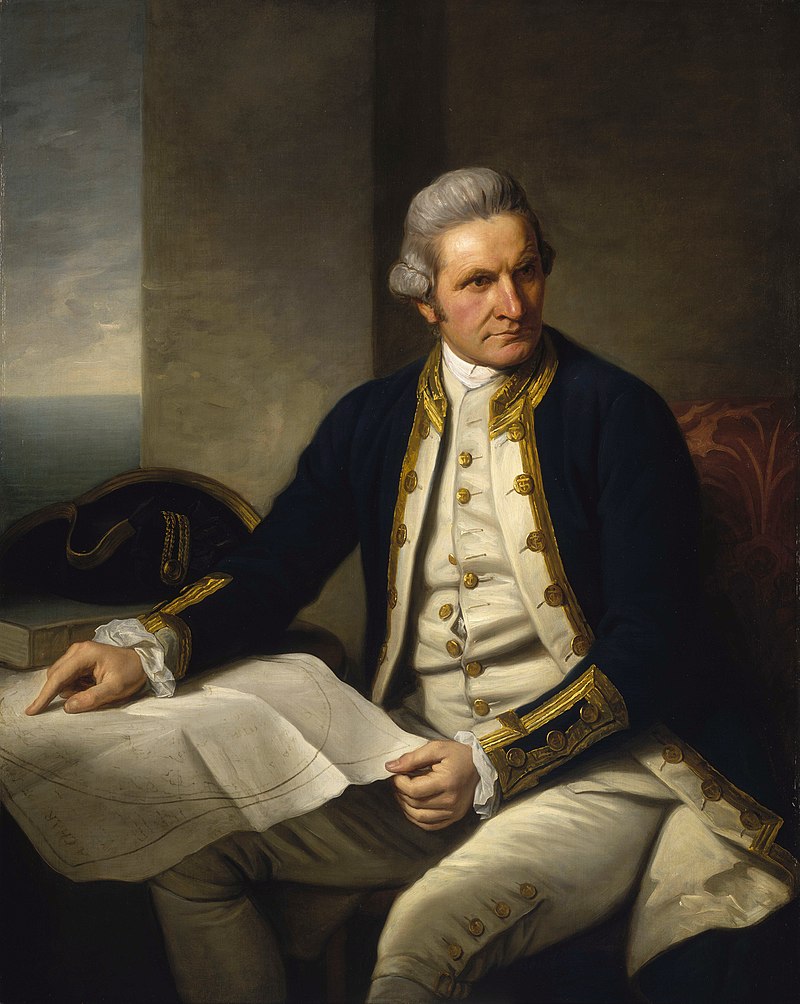
Captainjamescookportrait.jpg
Captain James Cook.
We learned in school that he was the first European to circumnavigate New Zealand, but what we didn't learn is that he was also one of the first people in the world to brew beer from malt extract.

Many brewers are suspicious of malt extracts, either because they think it's cheating (which it kind of is), or because they think it will make inferior beer.  Once upon a time that was true, too, but malt extract has come a long way over the years and the extracts available today will make excellent beers if used correctly.  This post is about the history of malt extracts.

Malt extract is made by taking the sugar extracted from malt during the mashing process and drying it, until it becomes either a syrup or a powder.  Some brands also contain hop extracts, so that the brewer doesn't need to purchase hops separately.  It is of course primarily used to make beer, but it is also used in cooking, and when I was a kid malt extract (without hops) was sold as a health food.  It was the '80s, when people were obsessed with health but somehow you could still get away with marketing concentrated sugar syrup as a health product.

In fact, malt extract does contain vitamins and minerals.  The British Navy was experimenting with malt extracts as early as 1772, trying to create an easily transportable concentrated malt to supplement sailors' diets and help prevent scurvy.  These first malt extracts were not a great success.  When Captain Cook took some on his second voyage to the Far East (1772 - 1775), his crew found that the beer they made with it had an unpleasant burnt taste.  However, it apparently improved when they added spruce leaves and molasses.  Eventually, the British Navy discovered that lemon juice was a more effective and less expensive way of preventing scurvy.

The trouble with early malt extracts was it took so long to boil away the excess water that by the time manufacturers produced a concentrated extract, the malt was burnt and unpalatable.  Technological advances in the late 19th century made it possible to boil the malt in a vacuum, which reduced the boiling time and created a better-tasting product.  At this stage malt extract was primarily a dietary supplement, but from the 1880s onwards British breweries began using it as a cheaper alternative to all-grain brewing.

The birth of modern extract brewing

Ironically, the glorious golden age of home brewing products we now enjoy began as a direct result of prohibition.  The kind of malt extract we're familiar with today, designed for the home brew market and often containing hops, was developed in the 1920s.  When the Volstead Act came into force American breweries could no longer legally produce beer, so they had to adapt, and one of the ways they did this was to produce malt extract instead.  Of course the extract could not be marketed as a home brewing product, so it was promoted as a baking ingredient.  This 1928 advertisement insists that Zobelein's Bohemian hop flavoured malt extract is a food product for use in cooking and baking.  Not for brewing at all.  Honestly.


Courtesy the Homestead Museum
Image from KCET.org

Customers knew perfectly well what the extract was really intended for.  Once you have malt syrup with hop flavouring conveniently added, you can make beer by simply adding water and yeast, and this clever innovation ensured that absolutely anybody could make their own beer.

Prohibition homebrew recipes tended to be a simple mixture of malt syrup, water, yeast, and sometimes corn sugar.  I'm hesitant to try one of these recipes because the results were often pretty horrible.    1920s malt extract was not as good as the extracts available today, and many Prohibition-era recipes didn't use it very well.

Malt extracts for craft brewing

The United States beer industry took a long time to recover from Prohibition.  Beer was produced commercially as soon as it became legal again, but the range of beers on offer was sharply reduced.  Beer enthusiasts who wanted styles that were no longer available were forced to make their own.

In New Zealand and Australia the primary reason for making home brew has historically been to save money, but like their American counterparts Antipodean brewers were also interested in making styles of beer that weren't available commercially.  Until recently the New Zealand and Australian commercial beer industries were decidedly basic, and anything more exotic than a lager or IPA could be difficult to get hold of.

Malt extract manufacturers responded to the increasingly sophisticated home brew market by developing more sophisticated products.  There is now a vast range of malt extract types available, and to some extent this has been enabled by the internet.  Thanks to Google it is easy to find recipes for any style of beer you like, as well as plenty of tips to help home brewers achieve good results whether they're using grain, malt extract, or a combination of both.

To paraphrase Leibniz, everything that is marketable demands to exist.

Saturday, 11 February 2017

Pseudo-Sumerian beer: the first experiment

Last year I made Sumerian beer, using a recipe from 1800 BCE.  It was good stuff, so I decided to try modernizing the recipe.  The aim of the game here isn't to recreate Sumerian beer, but to create a modern style that retains the characteristics of Sumerian beer while being more appealing to 21st century beer drinkers (i.e. me).  Mostly, that means carbonating it.  Last year's Sumerian beer was quite drinkable, but I would have preferred it to be carbonated and I would also have liked just a hint of hops.  The Sumerians didn't have hops, but I like them, especially the aromatic types like Tettnang and Cascade.


Pseudo-Sumerian beer


As you can see, the pseudo-Sumerian beer is a dark amber colour with a moderate head.  The taste is malty with a hint of caramel from the dates and some nice Amarillo top notes.  I chose Amarillo hops because they're not too overpowering and have a delicate citrus flavour that works well with dates, which were an important ingredient in Sumerian beer.  The hop flavour is not especially strong, but it's enough to cut through the sweetness of the malt and provide a bit of complexity.

Like the original Sumerian beer, this recipe uses barley malt, dates, and bappir.  Making bappir does take time and adds an extra step to the brewing process, but without it the beer wouldn't taste the same and you can make it ahead of time.  I described how I make bappir in this post - it's just malted barley, a little bit of spice, and some date honey mixed into a dough and then baked.

This batch came out at around 3% alcohol by volume, because I screwed up.  I hadn't used Black Rock malt before and didn't realise that you're supposed to use two cans for a 23 liter recipe, not just one.  However, there are occasions where you might want a low alcohol beer and this is a good choice.  It tastes much better than most of the light beers you can buy in Australasia.

Pseudo-Sumerian beer (PSB) recipe

500 grams bappir
250 ml date honey, which is dates that have been soaked in hot water and pureed - dried dates are fine and much cheaper than fresh ones
1 can Black Rock Amber liquid malt extract - please note that this should actually be two cans if you want a full strength beer
500 grams The Brew House light dried malt extract*
50 grams Amarillo hops, boiled for 1 hour
1 sachet dried ale yeast - you can get away with using bread yeast


The bappir needs to be mashed, but this is fairly simple.  You just crumble it into a ceramic casserole dish, cover it with boiling water, and leave it with the lid on for an hour.  Using a ceramic casserole dish keeps the heat in and thus helps extract the sugar from the bappir.

Strain the bappir mash into a 10 - 15 liter pot, then add three liters of hot water, both cans of amber malt extract, the date honey, and the dried malt extract.  Make sure the malt extracts are fully dissolved, then boil the wort until the protein break occurs and foam forms on top.  You'll also want to boil your hops while you prepare the wort.  After the wort has boiled you can strain the boiled hops into it, tip it into your fermenting barrel, top it up with cold water to make 23 liters (or 6 gallons if you're American), and pitch your yeast once it reaches the right temperature.

There are two key differences between this pseudo-Sumerian beer and real Sumerian beer.  One difference is the inclusion of hops, and the other is that I fermented my PSB a lot longer than the Sumerians probably did.  As I discussed in a previous post about Sumerian beer, I don't think the Sumerians used secondary fermentation.  They did not know how fermentation works, and may not even have understood the concept of secondary fermentation.  Since their brewing conditions would not have been very sanitary by 21st century standards, they may also have found it was unwise to leave their beer fermenting any longer than a couple of days.

Secondary fermentation starts to occur about three days into the fermentation process.  By then the yeast has consumed most of the sugar in the wort and has produced almost all the alcohol it's going to produce.  It then starts to metabolise more complex carbohydrates, which improves the taste of the beer and helps get rid of any off flavours.  Secondary fermentation is therefore an important part of the modern beer making process.  I left my pseudo-Sumerian beer to ferment for two weeks to ensure it got a secondary fermentation, then bottle conditioned it for a further two weeks.


* Feel free to substitute other brands of malt extract.  You just need an amber malt and a little light malt to supplement it. 

Monday, 5 December 2016

Commemorating 500 years of the Reinheitsgebot

2016 has been an eventful year, and at this point the one thing I think most of us can agree on is that we could do with a beer.  With that in mind, I'm sharing my recipe for traditional Bavarian style wheat beer.  I've been perfecting the recipe this year to commemorate the 500th anniversary of the Reinheitsgebot.


The Reinheitsgebot ("purity order" in German) is a piece of legislation adopted in Bavaria in 1516 that regulated what ingredients could be used in beer.  To some extent it was health and safety legislation, because in 1516 preventing beer from going off was a serious problem.  Brewers experimented with various additives in an attempt to increase their beers' shelf life, and unfortunately these additives were sometimes toxic.

The Reinheitsgebot stayed in force until 1987, when the EU rightly determined that it was an objectionable barrier to free trade, but its legacy still dominates the global beer market.  Most German beer is still brewed according to the Reinheitsgebot's specifications, and even here in Australasia most commercially produced beer complies with the purity order.  It has become part of the German beer tradition.

Originally the law required beer to contain only barley, water, and hops*, but German beer drinkers quickly found this list was too restrictive.  It effectively outlawed a number of traditional German beer styles that used different ingredients, including wheat beer.  So the list of permitted ingredients was expanded, and the first exception to be made was wheat.

My wheat beer recipe is a traditional Bavarian style, and doesn't comply with any version of the purity law because it contains honey and spices.  It isn't a historical recipe, in fact it's an extract recipe** rather than an all-grain recipe, but it tastes great.  It's a bold, full flavoured wheat beer with citrus top notes and smokey, honeyed undertones.

Ingredients

1.7 kg wheat liquid malt extract.  I use Mangrove Jack's Bavarian wheat, which already contains hops and has a packet of yeast under the lid so I do not need to buy these ingredients separately.
1 kg wheat beer enhancer
3 tbsp honey (approximately)
1 tsp coriander seeds, crushed slightly between your fingers to break them open
½ tsp ground nutmeg
½ tsp ground cloves

1 pack of carbonation drops for bottling – these are optional.  You can just use sugar or glucose syrup, but the carbonation drops are easier and more convenient.  I recommend them.

This recipe will give you 23 liters of beer, or 6 US gallons.

Instructions

The secret to brewing good beer with malt extract is to ignore the instructions on the side of the malt tin.  Instead, bring 3 liters of water to the boil, then add malt, beer enhancer, and spices.  Stir until everything is completely dissolved.  Boil the wort, stirring regularly, until the protein break occurs and foamy white stuff starts to form on the surface.  Once the protein break has occurred you can take the pot off the heat and leave it to cool for a while.

While the wort cools you can clean and assemble your fermentation bucket, and re-hydrate the packet of yeast that came with the malt extract by putting it in a bowl of warm water with a little sugar.  Pour four or five liters of cold water into the fermentation bucket, then add the wort.  Add more cold water until you have 23 liters of wort in the fermentation bucket.

Pitch the yeast when the wort reaches somewhere around 20 degrees Celsius  (18 to 23 degrees is apparently the optimal temperature range for ale yeasts), and ferment the stuff for two weeks.   I find fermentation can be a little slow to start with this recipe, but it should start within 12 hours.  As long as there's a kraeuzen on the top it'll be fine.

After two weeks the beer is ready to be bottled, and it should be conditioned in the bottles for at least two weeks.  Four weeks, however, is ideal.  If you drink it earlier it's likely to taste slightly "green".


*  Remember, this was over 300 years before Louis Pasteur.  They did not yet understand the role yeast plays in fermentation.
**  At some point in the future I'll do a post on the history of malt extracts.  It's more interesting than you might expect.

Friday, 18 March 2016

Sumerian beer

This Sumerian beer is made using a combination of fruit, malted grain, and bread.  It's very, very different from the kinds of beer we're familiar with today, but I found it surprisingly enjoyable.


Sumerian style beer, made according to the instructions in the Hymn to Ninkasi.


In my last post I discussed the Hymn to Ninkasi and what it tells us about Sumerian brewing practices.  I used the Hymn to develop a recipe for Sumerian style beer, and this is the result.

I won't lie to you: I didn't really expect this stuff to be very nice.  It has no carbonation at all, and no hops.  It also didn't get a secondary fermentation, which is usually an important part of the brewing process.  But this beer surprised me.  It isn't bad at all; in fact I like it.  It has a fresh, clean flavour and is pleasantly refreshing on a hot day after work.  The taste of barley comes through strongly and there are also distinct fruit flavours, but it's not very sweet and I think the different flavours are fairly well balanced.  The alcohol content is 4.5% by volume, so it's comparable to regular commercially produced beer in that respect.

I suggest serving this beer around 12 degrees C - cellar temperature, not chilled like a lager.

Even after filtering the beer through cheesecloth there is still a layer of sediment on the bottom of the bottle, which is visible in the picture.  Using a straw enables you to avoid the sediment layer and that, I suspect, is why the Sumerians drank their beer through straws.

Although I've tried to follow the Sumerian brewing process as far as possible, I have made some modern compromises.  I've used modern equipment because that's what I have in my kitchen, and a modern approach to sterilization because life's too short for bad homebrew.  You can get food poisoning from drinking bad brews.  I also added some dried bread yeast.  The Sumerians may have used the yeast that grows naturally on grape skins to ferment their beer, but I decided to use dried yeast rather than rely on the grapes, because who knows what's on the skins of supermarket grapes?


The Challenge: Juicy Fruits.  A combination of dates and grapes helps to give this beer a distinctive flavour.

The Recipe: Technically, this beer requires two recipes.

For the bappir (beer bread)

500 grams two row barley malt
A splash of date honey
Spices - I used a quarter teaspoon each of aniseed and cumin, both of which were used by the Sumerians.
Enough water to turn the ingredients into a stiff dough

Because of the barley husks the dough will not stick together very well, but that's okay.  Just do the best you can.  Shape the dough into a flat, round loaf on a pizza stone or baking tray; I recommend using baking paper.  The dough is baked twice, like biscotti.  I baked it for 30 minutes at 180 degrees C, then sliced it into strips and put it back in the oven (which I had turned off) to dry out.  It smelled great, but due to the presence of barley husks I wouldn't eat it unless I had to.

This is what the bappir looked like when it came out of the oven:


It did crumble a bit, but that's fine.  It has to be broken up for mashing anyway.


For 3 liters of Sumerian beer

Bappir from previous recipe
600 grams two row barley malt
Half a liter of date honey
A good handful of grapes
A teaspoon of bread yeast

I crumbled the bappir into a bowl, added the grain, and mashed them at 55 degrees C for 60 minutes.  Then I strained the mash and added date honey and grapes.  I pitched the yeast at 25 degrees C and let it ferment until the lack of bubbling noises indicated primary fermentation was over, then I bottled it.

I strongly recommend filtering the beer through a piece of cloth before bottling.

Note that my recipe only makes a small quantity.  You can of course scale it up to meet your requirements, but this stuff won't keep and should be consumed within a few days of brewing.

The Date/Year and Region: Southern Mesopotamia, c1800 BCE.

How Did You Make It: I developed the recipe based on the Hymn to Ninkasi.

Time to Complete:  About four hours' preparation time, plus three days to ferment.  Bear in mind though that most of that preparation time is just waiting for things to bake, or mash, or cool down enough to pitch the yeast.  The amount of actual, hands on work involved is fairly minimal.

Fermentation could take more or less time depending on the yeast and the environmental temperature, as with any beer.  It's ready to drink when you can't hear any more bubbling in the fermentation vessel.

Total Cost: $10.80.  This was a comparatively expensive beer recipe, because I had to buy dates.  Note however that although dates are expensive in New Zealand, they would have been cheap and readily available in ancient Mesopotamia.

How Successful Was It?  Much more successful than I thought it would be.  Because it's so different to the beers we're familiar with now it may be an acquired taste for modern beer drinkers, but I say put your expectations aside and give it a chance.

Leaving the barley husks in the bappir was a good idea, even though it made the dough difficult to mix and shape.  As I mentioned in the last post other people who have tried Sumerian beer have found that their mash stuck, but I didn't have that problem.  I think that was probably because of the barley husks.

How Accurate Is It? It's as accurate as I could get it based on my current understanding of Sumerian brewing.  To some extent I've had to make interpretations and use my best judgement, and the ingredients may not be exactly like the ones the Sumerians used.  Barley, for  instance, has probably changed a bit in the last 4000 years.  And, of course, I've used modern equipment.  But on the whole I think it's a fairly reasonable recreation of Sumerian beer.

I think this is a reasonable interpretation of the Hymn to Ninkasi, and one that fits the evidence we have about Sumerian brewing,  but other interpretations are possible and they are equally valid. 

Monday, 14 March 2016

Let's take a look at the Hymn to Ninkasi


The Hymn to Ninkasi, picture from Tulane University.  It was written around 1800 BCE by an unknown scribe.


Ninkasi was the Sumerian goddess of beer.  The Hymn to Ninkasi is not exactly a beer recipe in the modern sense, but in lines 13 to 48 it contains a fairly detailed description of the process by which Sumerians made beer four thousand years ago:
It is you who handle the ...... and dough with a big shovel, mixing, in a pit, the beerbread with sweet aromatics. Ninkasi, it is you who handle the ...... and dough with a big shovel, mixing, in a pit, the beerbread with sweet aromatics.
It is you who bake the beerbread in the big oven, and put in order the piles of hulled grain. Ninkasi, it is you who bake the beerbread in the big oven, and put in order the piles of hulled grain.
It is you who water the earth-covered malt; the noble dogs guard it even from the potentates (?). Ninkasi, it is you who water the earth-covered malt; the noble dogs guard it even from the potentates (?).
It is you who soak the malt in a jar; the waves rise, the waves fall. Ninkasi, it is you who soak the malt in a jar; the waves rise, the waves fall.
It is you who spread the cooked mash on large reed mats; coolness overcomes ....... Ninkasi, it is you who spread the cooked mash on large reed mats; coolness overcomes .......
It is you who hold with both hands the great sweetwort, brewing it with honey and wine. Ninkasi, it is you who hold with both hands the great sweetwort, brewing it with honey and wine.
1 line damaged
You ...... the sweetwort to the vessel. Ninkasi, ....... You ...... the sweetwort to the vessel.
You place the fermenting vat, which makes a pleasant sound, appropriately on top of a large collector vat. Ninkasi, you place the fermenting vat, which makes a pleasant sound, appropriately on top of a large collector vat.
It is you who pour out the filtered beer of the collector vat; it is like the onrush of the Tigris and the Euphrates. Ninkasi, it is you who pour out the filtered beer of the collector vat; it is like the onrush of the Tigris and the Euphrates.

- Translation by Miguel Civil available at the Electronic Text Corpus of Sumerian Literature, Oxford University.

Let's recap this process:

  1. Ninkasi bakes beer bread flavoured with aromatic herbs and/or spices.  This is a special type of bread called bappir which was used to make beer.  In 1800 BCE cuneiform it is denoted by a combination of the sign for beer and the sign for bread. 
  2. Ninkasi malts grain, and prepares an infusion mash.  
  3. She mixes wort with honey and wine, then ferments the resulting mixture.
  4. Finally, Ninkasi filters the fermented beer and then it's ready to drink.  This beer does not get a secondary fermentation like the beers we're familiar with today, and it doesn't get carbonated.

Unfortunately, the poem doesn't give any guidance as to how much of each ingredient should be used, so I will just have to guess the ingredient quantities.

Dates were probably one of the flavouring agents used to make bappir, and I would expect that some herbs and spices were included as well.  Ancient Mesopotamian people liked spiced food and the Sumerian recipes that survive tend to use multiple flavouring agents*.

I'm a little confused as to whether the grain used to make the bappir is supposed to be malted.  It's possible to make bread from malted grains and the malting process is necessary in order to release fermentable sugars from the grain.  The Hymn seems to imply the bappir has already been made by the time Ninkasi gets started on the malt, but there are scholars who think bappir was made from malted grains.  Perhaps it was made with an earlier batch of malt?  This is possible.  Bappir could be stored for relatively long periods and seems to have been a way of preserving grain for future use.

Another question is why the stuff Miguel Civil translates as "sweetwort" appears to be something Ninkasi can hold in her hands, when wort is a liquid.  Is this just a poetic metaphor?  Is she squeezing the grain/bappir residue to extract as much wort as possible?  It's hard to tell exactly what's going on here.

According to Miguel Civil, the honey mentioned in the hymn is likely to be date honey, while the wine could be either wine, grapes, or raisins.  If it is meant to be grapes or raisins, this may be how the Sumerians introduced yeast to their wort; yeast grows naturally on the skin of grapes.

Exactly how long should the beer be allowed to ferment?  Well, I think the hymn gives us an answer when it says the fermenting vat makes a pleasant sound.  Beers and wines make an audible bubbling noise during primary fermentation.  When you can no longer hear bubbling, the primary fermentation is complete.  I suggest the hymn is telling us, in its poetic way, that the beer was ready to drink after primary fermentation had finished.

The key problem with interpreting the Hymn to Ninkasi is that in order to understand it we have to filter it through modern knowledge about how the brewing process works.  The Sumerians did not have a modern understanding of the science behind brewing so there's no guarantee that what makes sense to a modern researcher bears any resemblance to what the Sumerians actually did.  In some ways the Hymn to Ninkasi raises more questions than it answers, but there's enough there to have a crack at brewing some Sumerian beer and a number of researchers have done so.  There are modernized recipes based on the Hymn available here courtesy of Brew Your Own, and here courtesy of the Maltose Falcons.

Note that these modern recipes include rice hulls.  Brewers add rice hulls to their mash to prevent it getting sticky and clumpy, but rice did not grow in ancient Sumeria.  We don't know what, if anything, the Sumerians used instead.  A potential answer lies in the fact that bappir was not eaten on its own, except during famines.  This possibly (though not necessarily) indicates the bappir was unpalatable.  If that's the case, I suspect bappir contained barley husks as well as the grain itself.

Some researchers question whether Sumerian beer contained alcohol.  Personally I'm inclined to think the question is more how much alcohol it contained; remember the hymn specifically says the fermenting vat makes a pleasant sound.  In other words, something is definitely fermenting in there.  But exactly how much alcohol the beer contained is open to question and different types of beer may have differed in strength.  I have a hydrometer now, so I can put this to the test when I make my Sumerian beer.  At a guess I'd say it will be comparable to modern commercial beers - about 5% alcohol by volume, however the inclusion of date honey means it would theoretically be possible to make a brew with a higher alcohol percentage.

In the next post I'll share the practical results of all this theory!


* D.T. Potts. 1997.  Mesopotamian Civilisation: The Material Foundations.  London: The Athlone Press.